
FX Trading Is Becoming the Default Path for Self-Directed Investors
Self-directed investing has always appealed to a certain personality type: analytical, independently minded, comfortable with complexity, and averse to intermediary fees. A decade ago, that profile represented a relatively limited portion of the investing population, those with financial expertise or the technical knowledge and temperament to manage their own market participation without institutional assistance. That segment has grown considerably, driven by the availability of more accessible information, more navigable platforms, and a broader cultural acceptance of individuals managing their own financial decisions across larger portions of the professional population.
The FX trading market has established a genuine position within that growing self-directed space in ways that outperform competing asset classes on structural grounds. The twenty-four-hour trading sessions that characterize the forex market suit investors who prefer to engage when they have the time and attention available, rather than being constrained by exchange hours. Liquidity in the major currency pairs allows for entries and exits at fair prices in a way that less liquid bond markets or thinly traded equities do not reliably support. Few asset classes have the depth of retail-level educational content that forex does, and what exists is accessible enough that a serious learner can make meaningful progress without needing professional qualifications or institutional resources to get there.
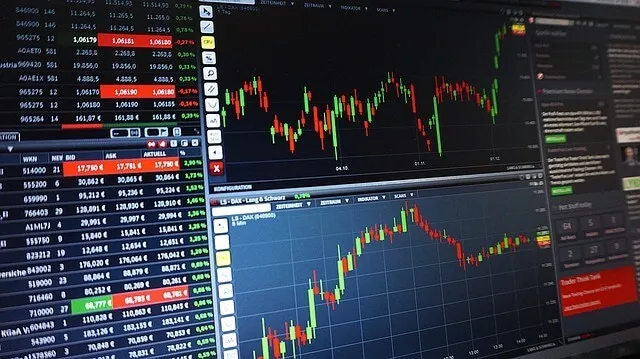
Image Source: Pixabay
Many self-directed investors are drawn to macroeconomic analysis, which currency markets accommodate more directly than most other asset classes. A person who follows economic developments globally, monitors central bank communications, and has formed views on the relative performance of various economies can apply that knowledge to forex in a manner that is directly relevant and actionable. That alignment between what the self-directed investor reads and what actually moves the instruments being traded is not replicated in pure technical analysis of less macro-sensitive instruments.
The self-directed investor’s preference for knowing and controlling their exposure is more straightforwardly satisfied in currency trading than in many alternative investment structures. With a leveraged CFD position on a currency pair, the investor knows precisely the maximum loss if the trade closes at the stop loss level, and can calibrate that amount in accordance with their overall risk parameters. In portfolio structures that include multiple funds, complex fixed income vehicles, and alternative investments where risk characteristics are determined by third parties and documented in materials that most retail investors do not read in full, that level of direct control is considerably more difficult to achieve.
The community infrastructure that has developed around forex has created an environment where self-directed investors can learn from peers, partially replacing the institutional guidance they have chosen to forgo. Online forums, groups, and regular gatherings provide a forum for testing analytical approaches against collective experience, discussing market observations, and breaking the isolation that can accompany purely self-directed learning and practice. That community dimension is not intended to substitute for individual discipline but to introduce a level of feedback and perspective that purely solitary practice does not provide.
The convergence of FX trading and self-directed investing represents a reconfiguration of how financially engaged adults relate to markets. The intermediated model, with institutional expertise positioned between the investor and capital allocation, remains predominant by volume and is the appropriate choice for many investors. The self-directed alternative, backed by accessible information, functional platforms, and a peer community, has now developed sufficient infrastructure and legitimacy to constitute a genuine choice rather than a fringe option. That alternative model is centered around FX trading, and its position there has become sufficiently established to be considered durable rather than transitional.

Comments